Nursery tours follow a familiar script. Someone walks you through tidy rooms, explains the curriculum, shows the outdoor area, and answers questions about fees and waitlists. All of it is useful and none of it tells you much about what a Tuesday afternoon actually looks like when nobody is visiting. The things that do tell you that are mostly small, observable, and easy to check while the tour is happening. Six of them give a far better read on a nursery school in Singapore than the presentation does.
1. How Teachers Interact With Children Who Are Not Part of the Tour
The teacher showing you around is presenting. The ones in the rooms are working, and watching them for a few minutes is the single most informative thing you can do.
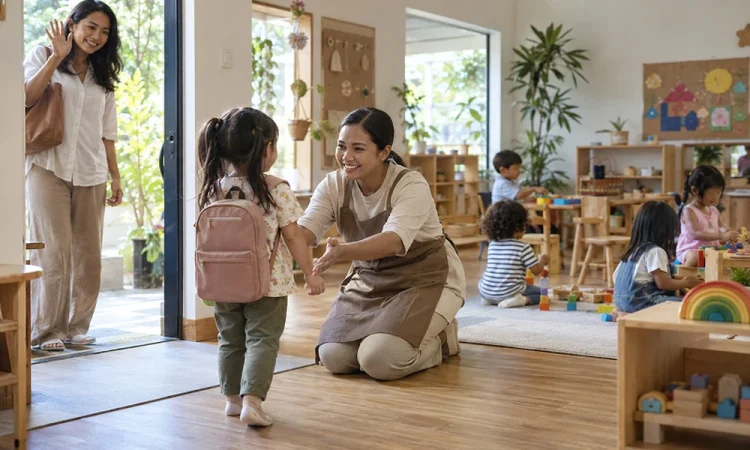
Notice whether they crouch to a child’s level, whether they use names, how they respond to a child who is upset or refusing to cooperate, and whether the tone is warm or purely managerial. Children’s responses matter too: do they approach staff easily, or do they keep a distance.
2. Whether the Environment Is Set Up for Children’s Independence
Look at heights. Are shelves, hooks, and toilets positioned so a two or three-year-old can reach them, or does everything require an adult? Can children access toys and materials themselves, or are they stored where only staff can get them?
Classrooms designed around children’s independence tend to reflect a particular approach to care. Rooms where everything is adult-controlled often indicate a more custodial model, which some parents are fine with and others are not.
3. The Condition of Toilets, Nappy Changing, and Handwashing Areas
These spaces reveal hygiene practice more reliably than anything else. Check for a dedicated changing surface, handwashing immediately accessible, proper disposal, and separation from food areas.
It is entirely reasonable to ask how often surfaces are sanitised and what staff do between each nappy change. Parents visiting nursery schools near you in Singapore often skip this part of a tour out of politeness, and it is the area where standards vary most between otherwise similar-looking centres.
4. How Outdoor Space Is Actually Used
Ask how much time children spend outdoors daily, what happens on wet days, and how many staff supervise. Then look at the space itself: fencing, surfacing beneath climbing equipment, shade availability, and whether a small child could leave unnoticed.
A well-equipped outdoor area used for twenty minutes a day is worth less than a modest one used properly.
5. Noise Level and General Atmosphere of the Rooms
Nurseries should sound busy. What you are listening for is the quality of the noise: engaged activity sounds different from chaos, and a very quiet room full of two-year-olds is sometimes a sign of over-restriction rather than calm.
Notice also whether staff seem relaxed or stretched. Ratios on paper matter less than whether the adults present appear able to attend to the children in front of them.
6. Displayed Work and Whether It Belongs to the Children
Wall displays of twenty near-identical crafts suggest adult-directed work with limited choice. Displays showing individual variation, including messy and unfinished pieces, suggest children are making their own decisions.
Neither is wrong, and the difference indicates something real about how the day is structured and how much autonomy children have.
Visiting Twice, at Different Times
Scheduled tours happen when a centre is ready for visitors. A second, shorter visit at a different time of day, ideally near pickup or mid-afternoon, shows the same place under ordinary conditions.
If a centre is reluctant to accommodate that, the reluctance itself is information. Most are happy to, and the twenty minutes it takes usually tells a parent more than the full tour did, because what you are seeing is simply the centre operating rather than the centre presenting itself.
Contact Raffles Kidz International to arrange a tour and a follow-up visit during a regular school day.